Don't just pull up, Slxde through.
Slxde, pronounced as Slide, is a new generation e-hailing platform that facilitates the interaction between a willing driver and a willing passenger, where the ride fare is primarily composed using a formula that only lets a passenger pay for what they use. It is a service, that in its use, aims to uphold the standards of safety and security of the parties involved while also maintaining the core principles of affordability for the passenger and profitability for the driver.

Affordability
The pricing model is structured in such a way that it accounts for affordability, this means that you only pay for what you use. By taking into account the distance it takes to pick you up, the distance it takes to drop you off, and comfort, we established a formula to meet your exact needs.

Example of Pricing Model
The pricing model also accounts for the number of friends you'll Slxde with on your journey, if there's one for example, you both individually pay less, x = R11.75 and y = R11.75, than you would if you were alone, x = R15. You collectively pay more because more weight (+1 more friend) affects the fuel economy of your ride.

Safety & Security
A face ID submission and verification process from both you and the driver will be asked so as to uphold the safety and security standards of the platform. Don't worry though, it will be a seamless process.

Price Composition
The pricing model accounts for a base fuel economy that'll be your guide which will indicate when you break even and when you start making a profit, we take into account traffic congestion, the weather, a car's fuel economy, terrain, weight of the passenger(s), driving style, and overall distance travelled.

Safety & Security
Your safety and security is a priority to us, you and the passenger(s) will be required to provide a Face ID at the middle of the ride process so that we verify who is your actual passenger and that you are who you say you are.

Profitability
With profitability in mind, users are required to pay for what they use, meaning that the pricing model factors in the distance to pick up, the distance to drop off, the comfort and the number of passengers.
The pricing model is made up of the following components: cost to pick up a passenger, cost to drop off a passenger, the comfort fee charged during the ride, the wastage and the cost component.

Cost To Pick Up
The cost to pick up a passenger is calculated using the number of kilometres (distance) a driver has to travel to fetch you, the price of petrol at the time, and the base fuel economy.
Cost To Drop Off
The cost to drop off a passenger is calculated using the number of kilometres (distance) from the point a driver pick up a passenger to the point they dropped them off, the price of petrol at the time, and the base fuel economy.

Comfort Fee
The comfort fee charged is calculated using the distance between the passenger pick up and drop off points.

Wastage Fee
The wastage fee is a charge introduced to deal with the implications caused by the new regulations. If a driver drops a passenger off in a jurisdiction they have no permit in there needs to be an account of how they get back to their jurisdiction, so we composed a variable that takes the distance from the drop off point to the closest edge of the jurisdiction as well as a lower base fuel economy to establish the wastage.
Cost Component
The cost component is a variable created to still keep prices affordable, it provides passengers at each ride with free kilometres to use so as to keep the price of the fare as low as possible, there are conditions to this however. A request frequency criteria is used to determine how many kilometres per ride a passenger is allowed to claim.
To still deal with the issues of affordability and profitability a decision was made to use the five above components, in various combinations, in 3 distinct algorithms so as to provide relief of some sort to the driver and the passenger separately.
First Occurrence Algorithm
This algorithm primarily uses 3 of the 5 components: cost to pick up, cost to drop off and the comfort fee. The formula here does not take into account the parameters set by the Department of Transport's regulations, this is so that some measure of affordability could be squeezed in while there is some time left. So this occurrence fucntions without regard for the jurisdictions, so it maintains the current status quo of e-hailing services. From the onset, this algorithm will add the 4th component which is wastage, this is to deal with the cost of compliance in relation to the new regulations, we do, however, endeavor to maintain genuinely competitive prices and limited price variance within the platform.
Second Occurrence Algorithm
This algorithm will start its use from the 4th of November 2026, it primarily uses all 5 components: cost to pick up, cost to drop off, comfort fee, wastage fee and the cost component. A passenger, if they pass the criteria, will be provided with 3.75 credit kilometres each ride (cost component), this is so that though there is wastage there is also another measure put in place to control the stability of the ride fare. Each passenger at most will be allowed 30 credit kilometres, which is 3.75 kilometres per ride for 8 rides. This algorithm also uses ride-pairing which is that if a passenger A's drop off point is outside the driver's jurisdiction, which will result in wastage, we check to see if there is a passenger B whose origin is in the area of passenger A's destination, and also if passenger B's destination is in the area of passenger A's origin, if this holds true, we determine a meet point where driver A and driver B can exchange passengers so that neither passenger incurs a wastage fee. The cost component of 3.75 credit kilometres will still be added to the ride.
Third Occurrence Algorithm
This algorithm will start its use from the launching of the platform, it primarily uses 4 of the 5 components: cost to pick up, cost to drop off, comfort fee and the wastage fee. Because in the Second Occurrence Algorithm we placed focus on affordability, we need to now consider a slight shift towards profitability on behalf of the drivers. This algorithm uses ride-sharing which is that if a passenger sets a ride request and receive their ride cost there is no discount added to it, so to still take affordability into consideration we check two conditions, the first is that we check if there are 2 other passengers who have a ride request at the same time as the current passenger in the radius of 1.25 kilometres, if this holds true, the second condition is that we check if those 3 grouped passengers' various drop off points are within a 5.75 kilometre radius, if this is also true than the principle of "collectively you pay more but individually you pay less" is applied here to provide ride discounts to all three passengers. In this manner the wastage fee is split across all 3 passengers and a further discount is added, even though the driver will get a higher fare collectively. This algorithm is also where a passenger, on each ride, will pay a portion of the free 30 kilometres they received in the Second Occurrence Algroithm.
Children under the age of 6 are treated differently, if a passenger indicates that they are a single passenger but on arrival the driver finds a child under 6 the passenger is only charged per that passenger only. This is because a child under 6, on average, does not add plenty to the weight distributed across the car, so their weight in this instance is negligible. A passenger with a child under 6 does not get charged for the child. If, however, there are two or more children under the age of 6 than each two children are considered as a single passenger, what we mean is:
-> If one child under 6, child doesn't pay.
-> If two children under 6, children are charged as one passenger.
-> If three children under 6, only two children are charged as one passenger.
-> If four children under 6, children are charged as two passengers.
To have an idea of how exactly each algorithm works with its features, components and combinations, here are forms you can use to submit some values that will give you an idea of what kind of price you should expect and under what conditions.

First Occurrence Algorithm
Select the details of the components below, within each range we will choose a random value. If you want to be more specific like for example to check how much it would cost your normal ride route, use the second form.
Learn more about the First Occurrence Algorithm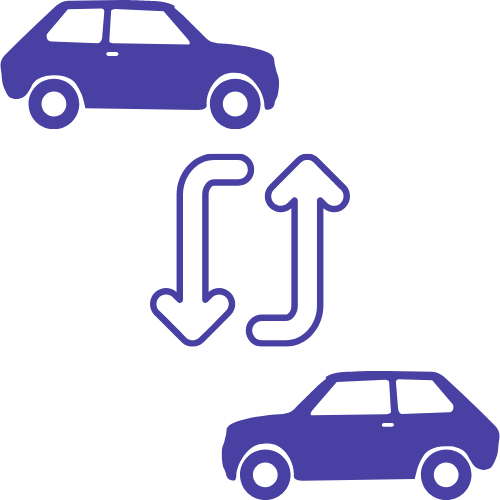
Second Occurrence Algorithm
Select the details of the components below, within each range we will choose a random value. If you want to be more specific like for example to check how much it would cost your normal ride route, use the second form.
Learn more about the Second Occurrence Algorithm
Third Occurrence Algorithm
Select the details of the components below, within each range we will choose a random value. If you want to be more specific like for example to check how much it would cost your normal ride route, use the second form.
Learn more about the Third Occurrence AlgorithmSlxde Direct Download

Slxde Driver Direct Download

9
Provinces
1232
Unique Postal Codes
477
Areas, Towns & Cities
Lets get in touch. Send us a message on our Facebook, Instagram, X, WhatsApp or Email:

Phone: +27712091637

Email: info@slxde.com